
Defining Drought
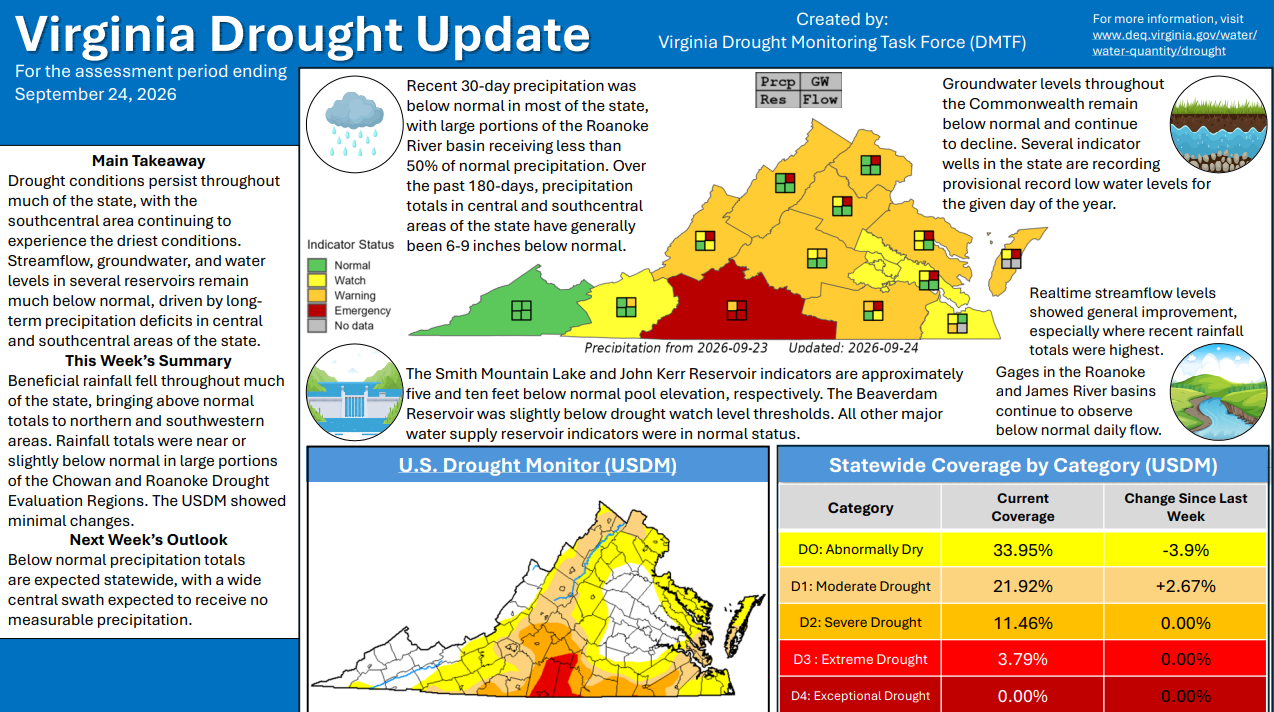
Drought Infographic courtesy of Virginia Department of Environmental Quality
In July, the city of Richmond issued its first voluntary water conservation advisory since 2002 because of below-normal flows in the James River. Nearby counties, including Henrico, joined in a show of region-wide collaboration. As of a September 22 report by the VA Drought Monitoring Task Force, 37.17% of the state remains in drought conditions that have been present since last year, with Henrico and our surrounding counties under drought watch advisories.
That may come as a surprise to many of you who spent the last few weeks of the summer under severe thunderstorm warnings, or with backyards and streets full of puddles and standing water. It might be tempting to think that, thanks to a few good rains, we’ve now made it out of the drought and things are back to normal. Unfortunately, that’s just not the case.
Let’s examine why by starting with a basic definition.
What is a drought?
A drought is generally defined as “a deficiency of precipitation over an extended period of time (usually a season or more), resulting in a water shortage.” That means scientists look at precipitation conditions over the long term. They also consider other information, including groundwater levels, reservoir levels, soil moisture, and streamflow. Officials with the Department of Environmental Quality (DEQ) began tracking lower-than-average precipitation starting in October of 2025, and that trend carried through the winter and into the spring and summer, leaving Virginia with the 11th driest half-year period since 1895.
So, we are behind. The good news? According to the National Oceanic and Atmospheric Administration (NOAA), Virginia is heading for a wetter fall.
However, just because the water is falling from the sky does not mean it’s ending up where we need it to alleviate the drought conditions. In fact, the strong thunderstorms the state experienced throughout July and August don’t do as much good as you might think. Thunderstorms produce a lot of rain all at once, so most of that rain will run off into drainage channels and streams, rather than soak into the ground where it will be the most helpful.
Despite impressive thunder and lightning shows and the heavy pitter-patter of the rain on the window, Virginia is still in a drought, so sound water conservation is more important than ever.
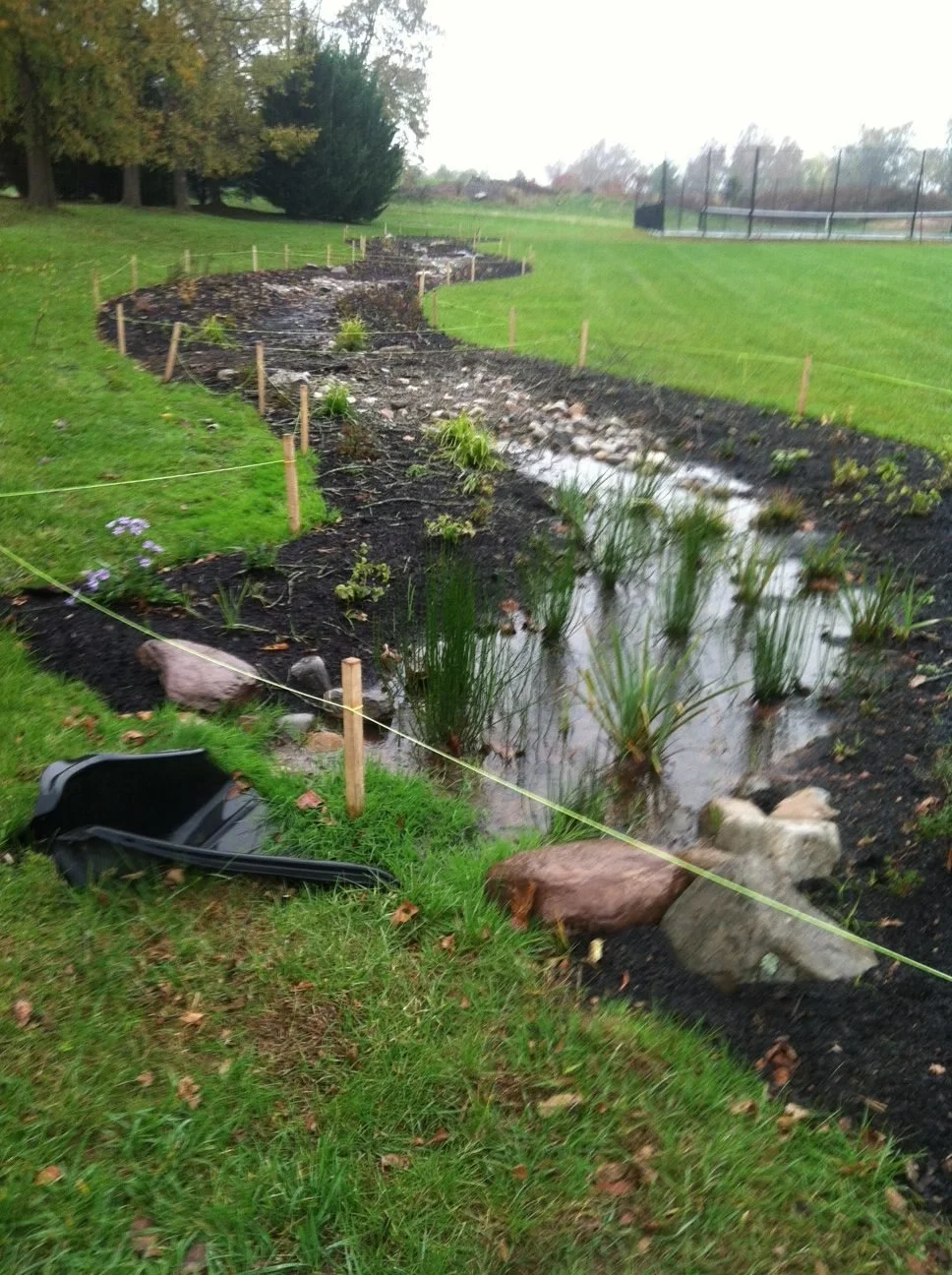
A “Dry Swale” stormwater conveyence in action.
So, what can you do?
Lawn & Garden: Reduce watering schedules to alternating days, and only water between dusk and dawn to minimize evaporation.
Outdoor Usage: Turn off decorative and ornamental fountains.
Vehicles & Cleaning: Limit the washing of vehicles, driveways, and sidewalks.
Pools: Limit or avoid filling swimming pools.
If you are interested in finding ways to help slow the flow of water on your property, to give it time to soak into the earth and replenish our groundwater, check out HSWCD’s Virginia Conservation Assistance Program (VCAP). This program provides homeowners with cost-sharing financial assistance to install water conservation practices such as rain barrels, bio-swales, and rain gardens.
Visit vaswcd.org/vcap for more information, or contact our VCAP Coordinator, Rey Belvin, at rbelvin@hswcd.org.
Check out DEQ’s drought webpage to learn more about statewide drought-monitoring efforts and to stay up to date.